
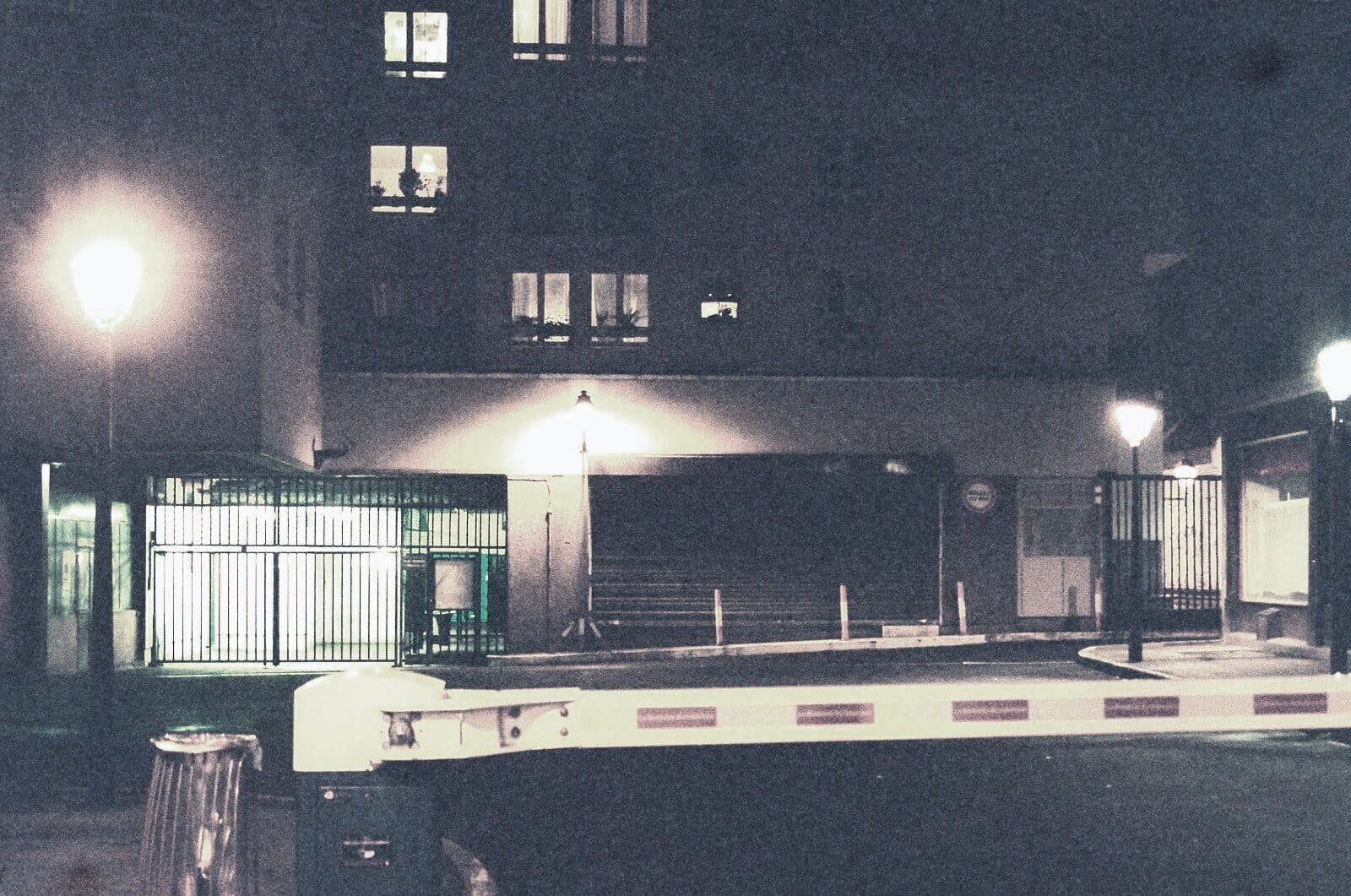
Security for Residential Communities
A residential gate handles more visitors in a day than most offices handle in a week. Volume, not intent, is the design problem.
Residential Communities
Consult. Investigate. Protect.
Community security is unusual in that the people being protected are also the people who overrule the control. A resident waves a vehicle through and the agreed process quietly stops existing. The answer is a process the committee owns, and reporting that shows what its gate actually does.
Advisory, investigation and guarding for this sector sit under one command structure, so a gap found in an assessment becomes a revised post instruction rather than a message to another vendor.
Where this sector actually loses ground.
The risks in a community are ordinary, high-frequency and cumulative — which is exactly why they are tolerated until an incident makes them visible.
Gate and visitor management at volume
Deliveries, food riders, app-based cabs, repair technicians and guests arrive continuously, often without a resident reachable on the intercom. Under that pressure the gate defaults to waving people through, and a visitor record becomes a list of first names and phone numbers nobody will ever check.
Unverified domestic help, drivers and vendors
The people with the deepest and most routine access to homes are usually the least verified — engaged privately by residents, admitted on a resident's word, and holding daily access to flats, keys and children with no antecedent check on record anywhere in the community.
Basement, parking and amenity control
Basements are poorly lit, poorly covered and rarely patrolled, and they hold vehicles, cycles and stored goods. Clubhouses, pools and gyms are used by guests and outsiders under a resident's name, with access rules that exist in the bye-laws and nowhere else.
Child safety and unattended edges
Play areas, service gates, terrace and machine-room access, construction or fit-out work in occupied towers, and contractors moving through common areas — all of it happens where children are, and none of it is controlled by the main gate.
Accountability to a changing committee
Instructions come from many directions, the managing committee turns over annually, and there is often no written record of what security was actually asked to do. Standards then drift with personalities rather than with performance.
Posts, supervision, shifts and the report that follows.
A community deployment is written as a manning plan approved by your committee, with post instructions residents can read, so that expectations at the gate are settled before an argument starts there.
Post structure
Main gate for vehicles and pedestrians with a separate visitor and delivery desk so that verification does not block traffic, tower or lobby posts where the layout requires them, clubhouse and amenity cover during operating hours, and night patrols covering basements, service areas, terraces and the boundary on recorded beat points.
Supervision layer
A site supervisor is accountable to a single named point of contact — your facility manager or a designated committee member — rather than to every resident who approaches a post. Rounds and night checks are documented, and personnel are additionally reviewed on courtesy and communication, which is what residents actually judge.
Shift pattern and handover
Cover is continuous across the gate, with reliever arrangements agreed so that a post is never left thin at meal or change times. Handover is recorded — visitor register, key register, incident entries and pending items signed across — so that a complaint raised at night is not lost by morning.
Escalation and reporting
A written escalation path covers medical emergencies, fire, disputes between residents, unauthorised entry and police interface, naming who is called and in what order. Your committee receives a periodic report covering visitor volumes, incidents, patrol compliance and complaints, and a scheduled review meeting rather than a WhatsApp thread.
Three disciplines, read against this sector.
Most engagements in this sector begin with one of the three and widen once the picture is clear. Open a discipline for the full scope of what it delivers.
Consult
We assess the community as a movement problem — how many people arrive, through which gate, and what the process asks of a guard who has ninety seconds to decide. Recommendations are written for a committee to approve and a facility manager to run.
- Gate layout, visitor and delivery process designed for actual daily volume
- Camera and lighting priorities set for basements, lobbies, play areas and service gates
- Bye-law-aligned procedure for amenities, contractors, move-ins and fit-out work
Investigate
Communities need verification far more often than they need investigation — but when something is stolen inside a gated boundary, the enquiry has to be handled with unusual care, because everyone involved continues to live there.
- Antecedent verification of domestic help, drivers, nannies and regular vendors
- Discreet enquiry into theft or misconduct within the community, handled without rumour
- Verification of contractors and service agencies engaged by the association
Protect
Community personnel are selected for temperament first. The job is ninety per cent communication with residents, delivery riders and visitors, and the deployment fails on rudeness far more often than on vigilance.
- Gate, visitor desk, lobby, amenity and night patrol posts staffed to an approved plan
- Women security personnel where frisking, amenity or school-gate duties require them
- Induction on the community's bye-laws, emergency procedure and escalation contacts
What you should be able to see.
A deployment is only worth what it makes visible. These are the measures we expect to be judged on in this sector.
A visitor record worth having
Entries are captured against a resident, a purpose and a time out, so that after an incident the gate can produce an answer instead of a memory.
Verified people in your homes
Domestic staff, drivers and regular vendors are documented and antecedent-checked, which is the single highest-value control a residential community can adopt.
Basements and edges that are actually walked
Night patrolling is recorded against beat points, so the parts of the community nobody looks at are covered by evidence rather than by assurance.
A committee that can see what it is buying
Periodic reporting on volumes, incidents, patrol compliance and complaints gives the association a factual basis for decisions, and survives the annual change of office-bearers.
The questions that come up first.
Residents complain that guards are either too strict or too casual. How is that resolved?
By taking the decision away from the guard. When the visitor, delivery and amenity processes are written down, approved by the committee and communicated to residents, personnel are applying a community rule rather than exercising personal judgement — which is what makes consistency possible. Where a rule is generating genuine friction, it comes back to the committee for a decision instead of being softened quietly at the gate.
How does verification of domestic help work when residents engage them privately?
The association sets the requirement and we execute it. Typically the community adopts a rule that any person holding daily access must be registered and antecedent-verified, and we then carry out identity and address verification and antecedent checks on that list, with records retained by the association. It only works if the committee mandates it — we cannot compel a resident, and we will say so rather than let the community assume a check has been done.
Our managing committee changes every year and instructions change with it. How do you handle that?
Everything material is written: the manning plan, the post instructions, the escalation matrix and the reporting format. A new committee inherits a documented arrangement it can review and amend deliberately, rather than a set of habits nobody can reconstruct. We also ask for a single named point of contact, so that instructions to personnel come through one route and are recorded.
Delivery volume at our gate is enormous. Will verification simply create a queue?
Which is why the delivery flow is separated from the vehicle gate in the design. Riders are handled at a dedicated desk with a defined, short check, and the community decides a standing policy — delivery to the gate, to the lobby or to the door — so that personnel are not renegotiating it a hundred times a day. The queue problem is almost always a layout and policy problem rather than a manpower one.
Other Sectors


Security built for Residential Communities.
Tell us the location, the working pattern and what you believe is going wrong. That conversation usually settles whether you need an assessment, an enquiry or a deployment — and it costs nothing.
Security. Intelligence. Assurance. — Pan India Presence